
Back to School 2026
TMTFMAGAZINE, Issue one, 2026: Education Changes Everything
Education Changes Everything
- 880
- Children supported in our latest Back to School
- 12
- Editions delivered since the first
- 16
- Years working in Cameroon
- 20+
- Schools reached across the region
- Countless
- Dreams inspired for a better tomorrow
- Careers that did not exist when your parents were at school
- How to use your phone to learn, and how not to be fooled by it
- Our culture, our pride
- Issue
- Issue one · 2026
- Venue
- Women's Centre, Buea
- This year
- Preparing Today's Children for Tomorrow's World
This issue is laid out to be printed. Use the button, or your browser’s own print command, to save it as a PDF.
TMTFMAGAZINE
- Editor-in-Chief
- Dorothy Akoh-Arrey
- Content Director
- Dopgima Stella
Board of Trustees2025 to 2027
- Senge Elong
- Anosike Benson
- Susan Funfe
- Irene Shupo
- Suzanne Kembling
- Caroline Fossung
- Atem Akoh-Arrey
- Violet Enyebe
The people behind this issue
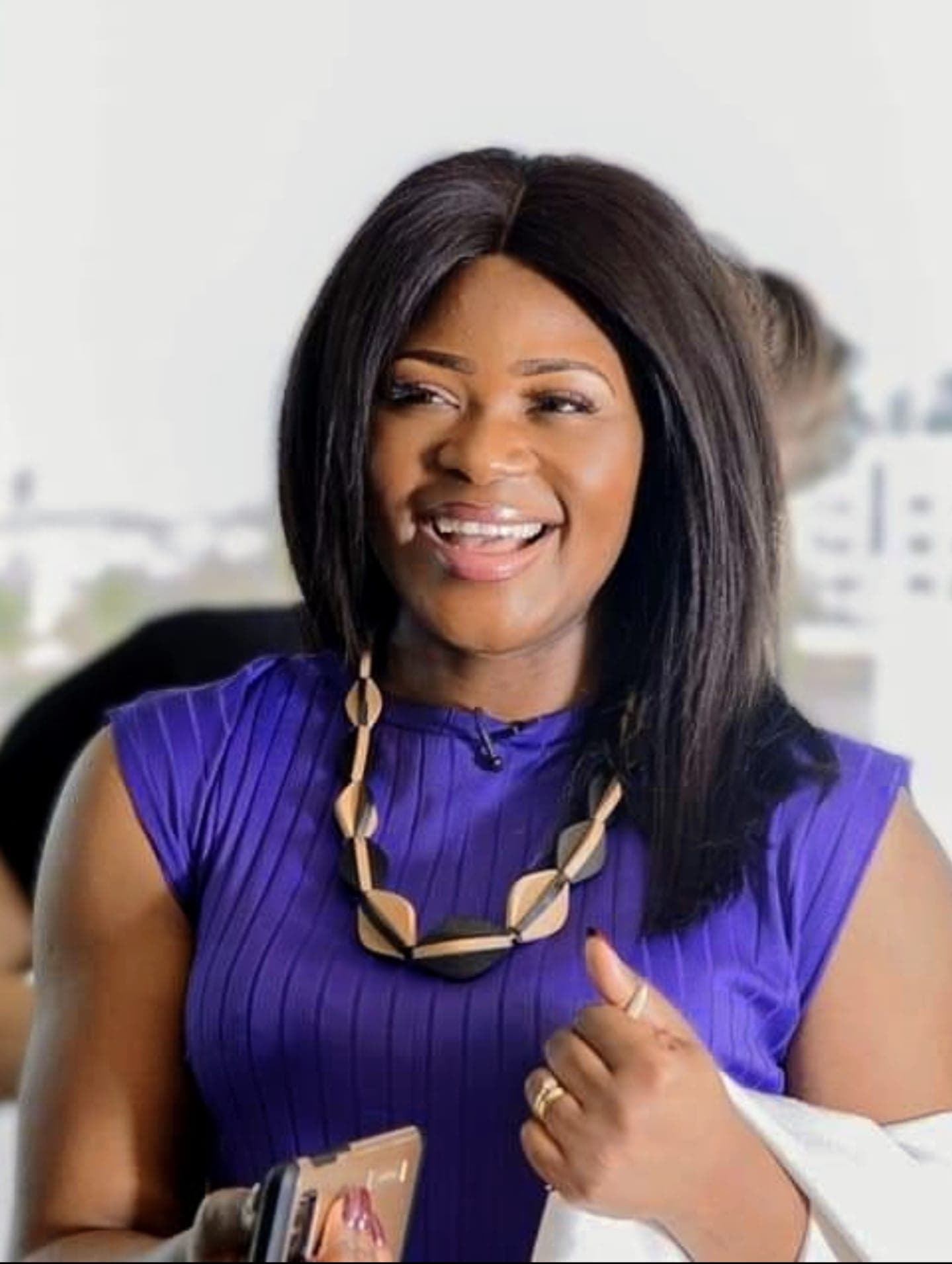
Dorothy Akoh-Arrey
Founder and Chief Executive
Dorothy founded Teach Me To Fish in September 2010, funding it out of her own pocket to keep a handful of children in school. Fifteen years on it reaches hundreds a year.
Born and educated in Cameroon through to university, she was Cameroon Editor for Macmillan UK Publishing before moving into the charity sector in 2006 and holding posts across several of Britain's largest.
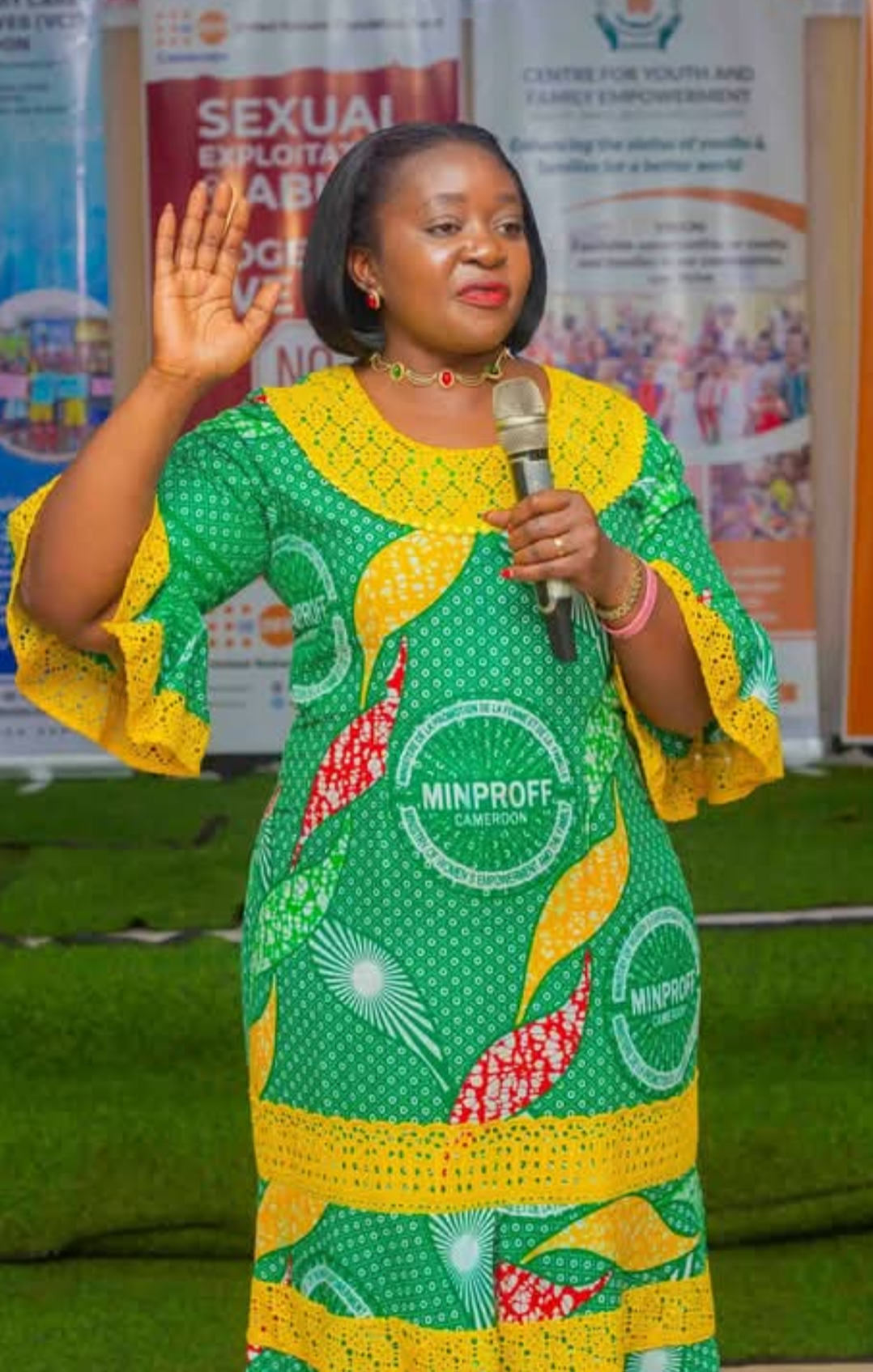
Eteki Stella Dopgima
Country Director; Founder and CEO, CEYOFE
Stella founded and leads the Centre for Youth and Family Empowerment in Buea, and is a gender expert and Director of the Women's Empowerment Centre there.
Her team does the groundwork Back to School runs on: finding the communities where support is most needed, assessing the children who will receive it, and sitting with their families.
In this issue
- WelcomeA letter from our founderWhy the foundation started, and what to take from these pages.
- Who we areTeach Me To FishWho we are, where we work, and what ten thousand francs covers.
- Why it mattersWhat school actually changesWhat school actually changes, and the four years we cannot report.
- TechnologyThe machines can do a lot. They still cannot do the thinking.AI, coding and the skills worth learning first.
- For parents and teachersWhat actually helps a child do wellWhat actually helps a child do well. Most of it is free.
- Learning onlineYour phone is a library and a liarYour phone is a library and a liar. Telling them apart.
- Our cultureOur culture, our prideEducation does not replace where you come from.
- Dream bigCareers of tomorrowTen careers, and the subjects that lead to each.
- MeetThe people behind the numbersThe people behind the numbers.
- PartnersOur partners in actionCEYOFE, the partner foundations, and how delivery works.
- WellbeingHealthy minds, healthy bodiesSleep, food, moving, and asking for help.
- Fun zonePuzzles, quizzes and one blank pageWord search, quiz, maths challenge, and a page to draw on.
- Thank youTogether, we are teaching children to fishThank you, and every route into the next edition.
A letter from our founder
This year's issue is about what comes next: the tools, the habits and the careers that will still be there when you finish school. Our founder on why the foundation started, and what she wants you to take from these pages.
Dorothy Akoh-Arrey
Founder and CEO
I started Teach Me To Fish in 2010 with my own money and a handful of children. There was no organisation behind it, no big fundraising campaign and certainly no grand plan. I simply wanted to help a few children stay in school for another year. But the reason I felt so strongly about doing that began much earlier in my own life.
I still remember a point during my secondary-school years when my mother struggled to find the money needed for my education. As a child, you may not understand the pressures your parents are carrying, but you understand the feeling. The uncertainty of wondering whether something as basic as staying in school could suddenly depend on money your family simply did not have. We overcame that period, and I was fortunate to continue my education, but I never forgot how it felt. I never forgot the vulnerability, or what it meant to see a parent trying desperately to give her child an opportunity she could not easily afford.
That experience stayed with me.
Years later, I began to see children and families facing the same uncertainty, children with ability, ambition and dreams, whose education could be interrupted not because they were unwilling to learn, but because their families could not afford school fees, books, uniforms or other basic necessities.
And I knew exactly what that could feel like.
That is where Teach Me To Fish became more than an idea for me. It became personal.
What we can do, and keep doing
What started with a few children has grown year by year because sometimes the difference between a child remaining in education and dropping out is an amount that can seem relatively small to someone elsewhere in the world, but can be impossible for a family already choosing between competing necessities.
We cannot reach every child in Cameroon who needs support, and we have never pretended that we can. But we can reach one. Then another. Then another.
We can do it responsibly, work alongside people who know their communities, follow the impact of our support and grow without losing sight of the individual child behind every number.
More than a decade later, that remains the heart of Teach Me To Fish.
I know what it feels like when education suddenly feels uncertain. I also know what becomes possible when that obstacle is overcome.
No child's potential should be determined simply by whether their family can afford the basic tools they need to learn.
That is why we keep showing up.
Thank you to every donor, volunteer, teacher and parent who made this year possible, and to CEYOFE and the partner foundations who do the work on the ground in Buea.
“Teach me to fish, do not keep giving me fish, so when you are not there to provide the fish, I will fish for myself and not go hungry.”
Teach Me To Fish
A foundation that began in 2010 with one person's own money and a handful of school fees, and now reaches hundreds of children a year in Cameroon.
Teach Me To Fish Foundation is named after a Cameroonian parable: teach me to fish, do not simply give me fish. It is a commitment rather than a slogan. Everything the foundation funds has to put a child in a classroom and keep them there.
The work is in Cameroon because that is where our founder was born and educated, from nursery school through to university, before building a career in the United Kingdom. Rather than spreading effort thinly across many countries, the foundation invests deeply in the communities it knows best, working with the same schools, families and organisations year after year.
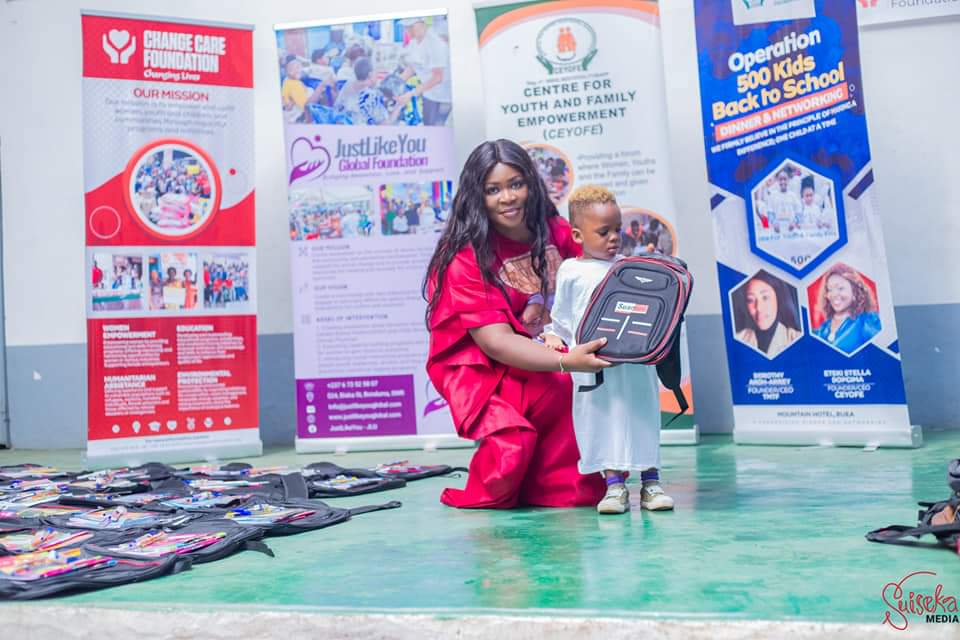
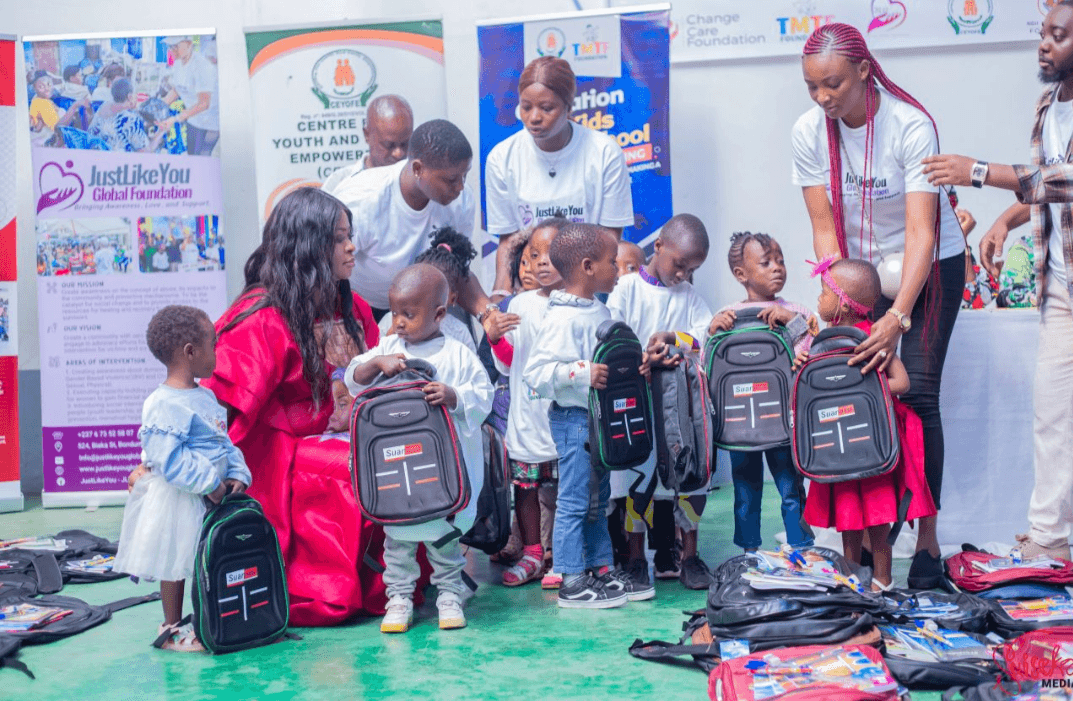
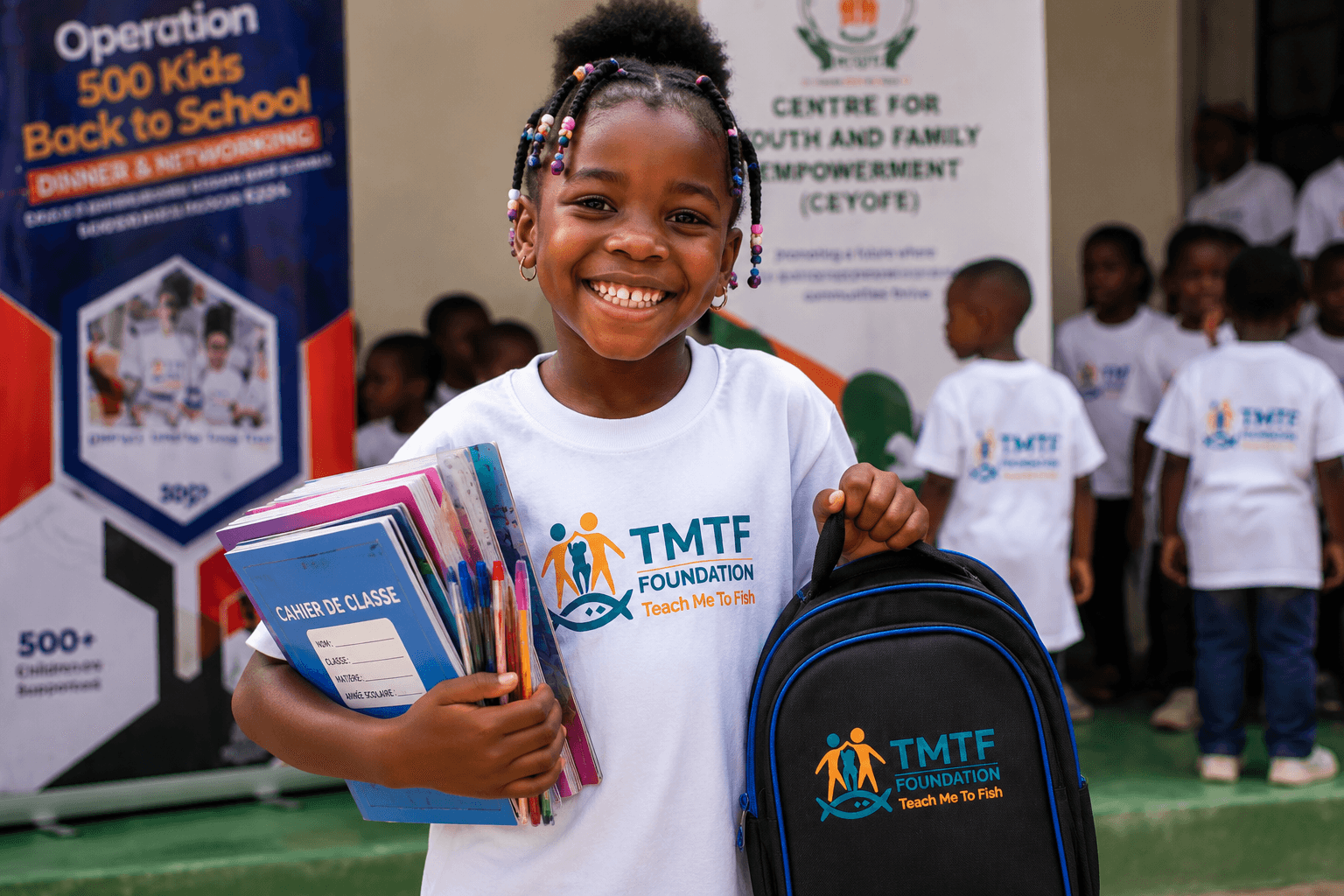
The flagship programme is Back to School, or Operation Ten Thousand Francs a Child. Ten thousand Francs CFA covers one child's fees, uniform and materials for a school year. Children collect their packs at a single event, alongside their families.
What school actually changes
Most children who are out of school are not there because they cannot learn. They are out because a fee went unpaid or a uniform could not be bought. Those are solvable problems, and this is what solving them has looked like.
- 127
- Children in the first edition
- 880
- Children in the most recent
- 4
- Editions with no publishable figure
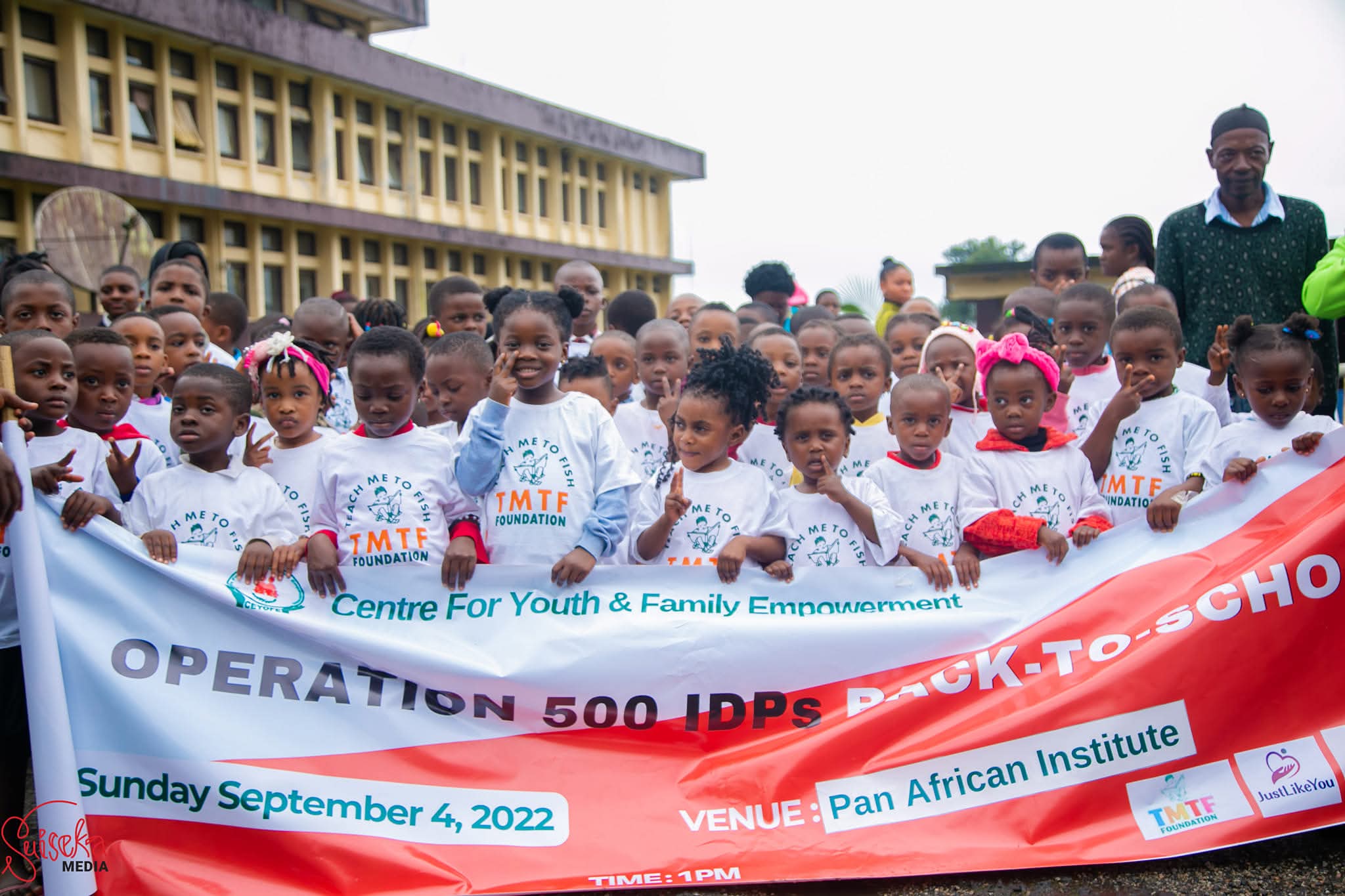
The first Back to School edition reached 127 children. The most recent reached 880. Twelve editions have been delivered since 2013.
Four of those editions carry no separate figure. They fell during the Anglophone Crisis, when schools closed and a single registration event was not possible. Support continued at a smaller scale, and those years were reported together rather than one by one. We show the gap rather than fill it with a guess.
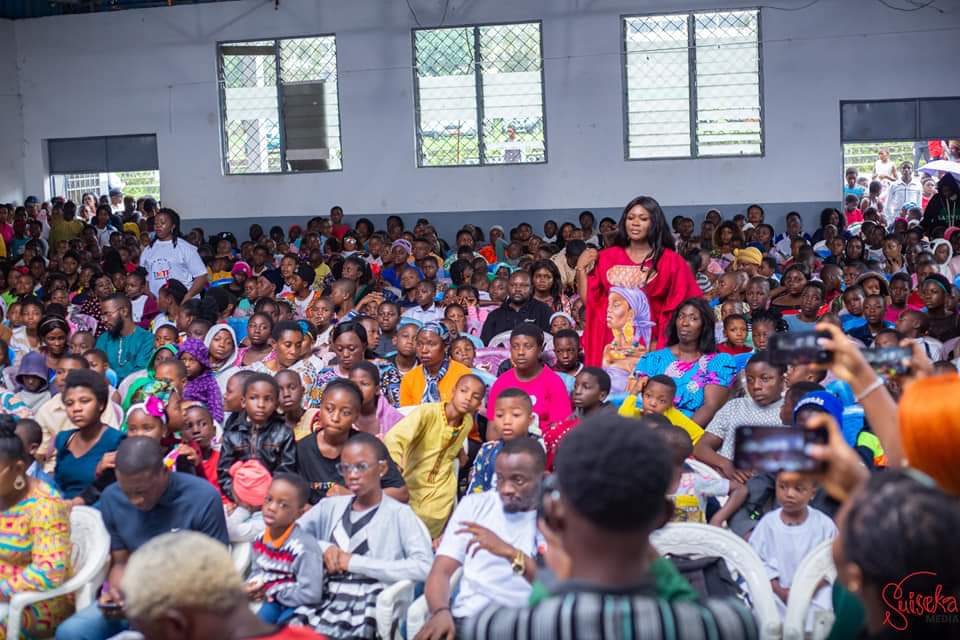
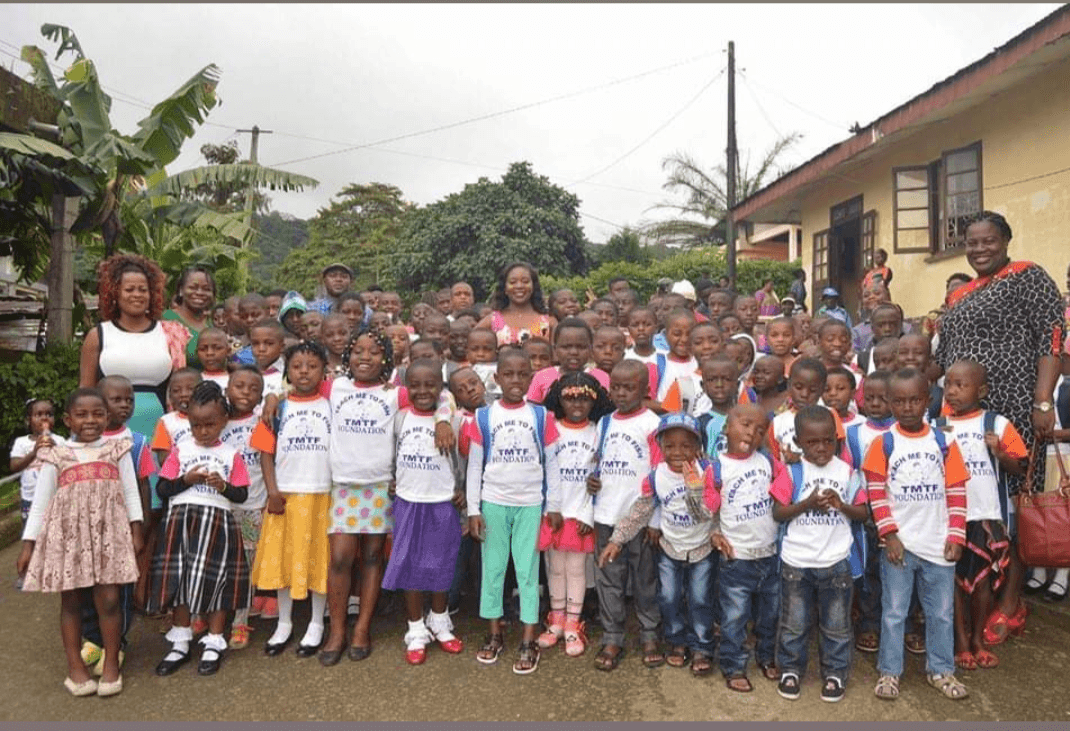
A Back to School day
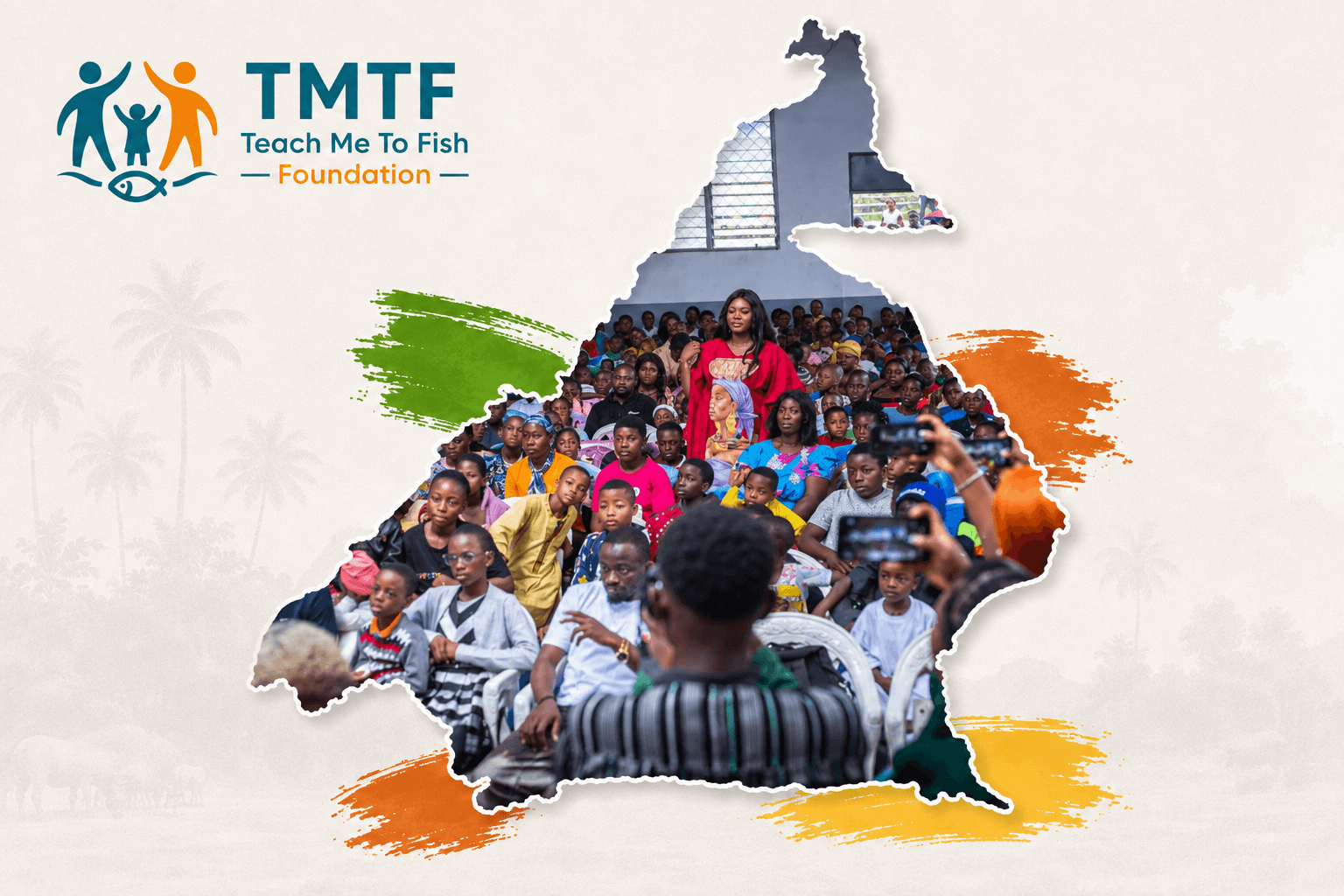
Registration, the hall, the handover, and the families who came. Photographed in Buea by the charity's own team, across several editions rather than one.
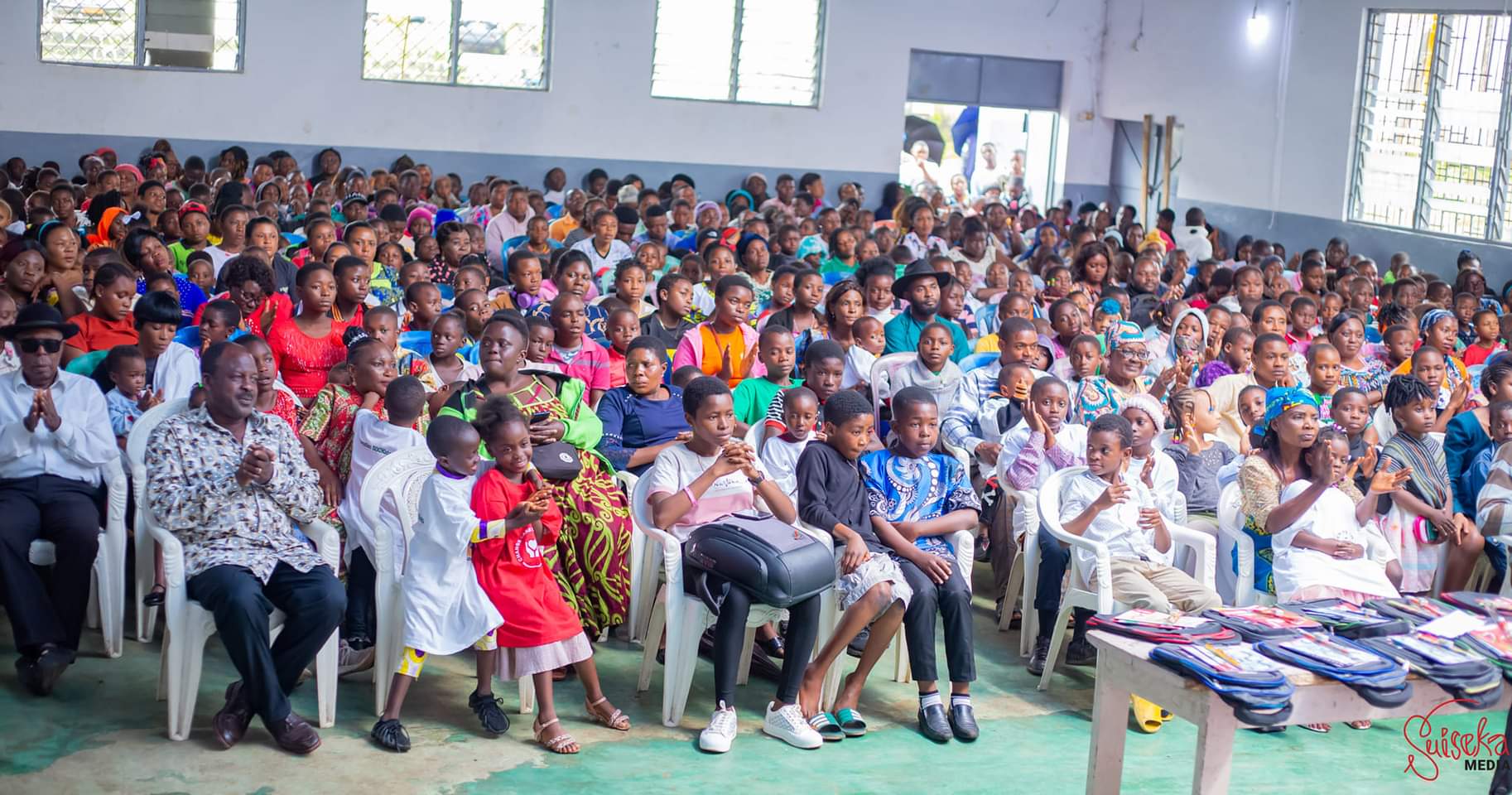
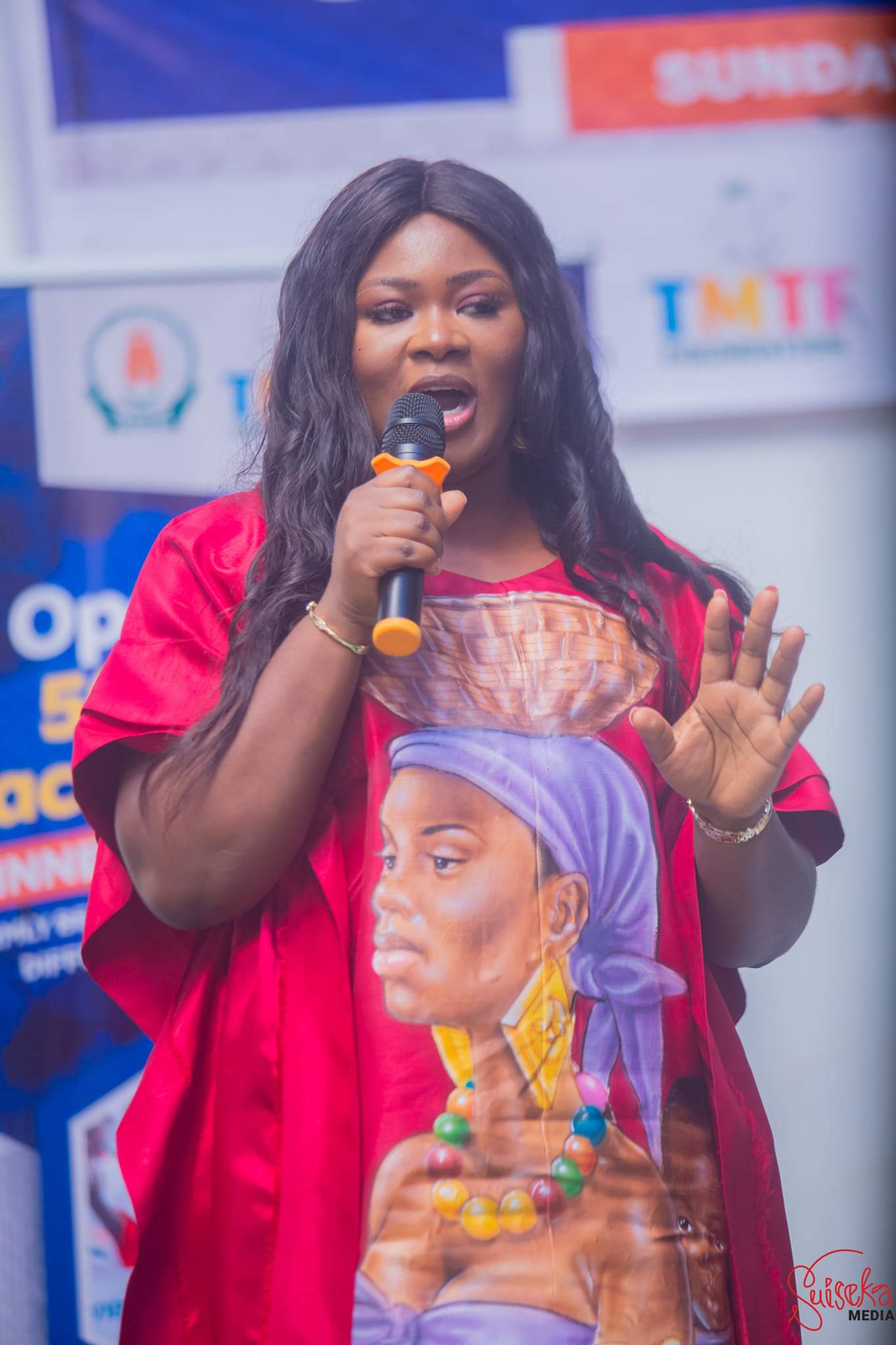
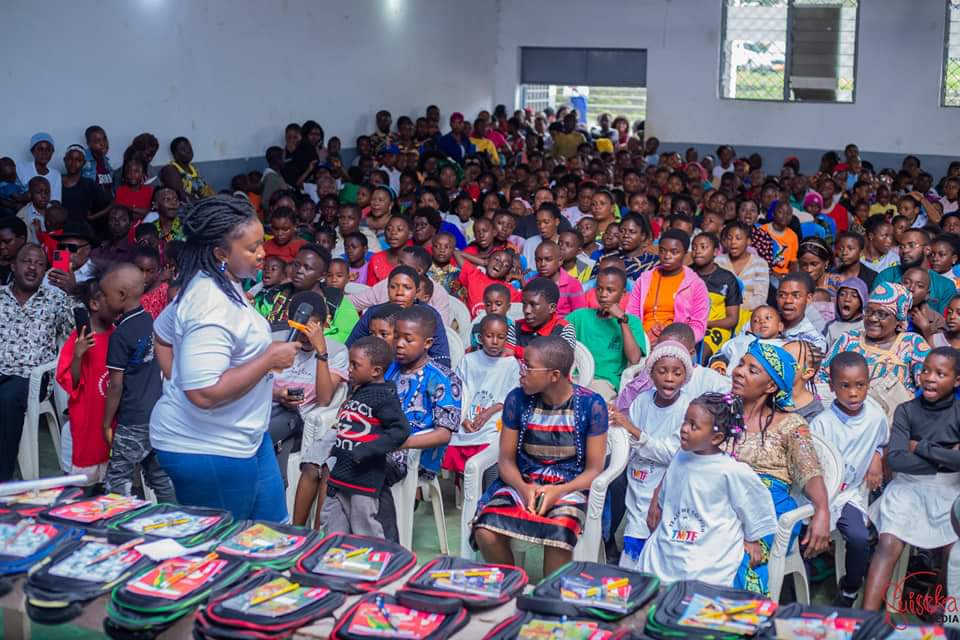
Photo essay · continued
The machines can do a lot. They still cannot do the thinking.
Artificial intelligence, coding and digital skills are changing what work looks like. Here is what is worth learning, what is worth ignoring, and why none of it replaces knowing things yourself.
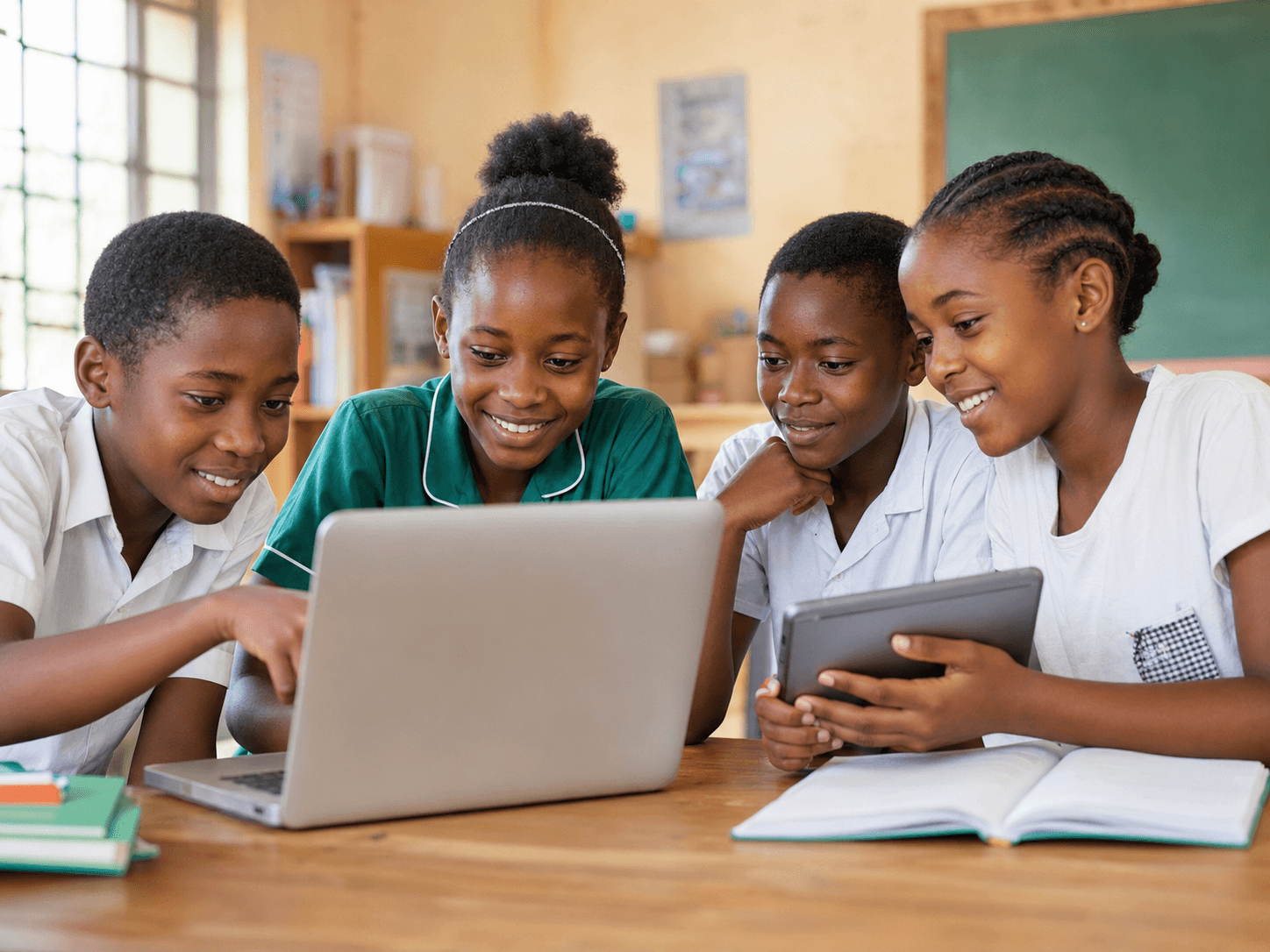
A computer that writes an essay for you has not taught you anything. It has taught itself. The children who will do well alongside these tools are the ones who can tell when the answer is wrong, and that ability comes from having learned the subject in the first place.
You do not need a laptop to start. Coding is a way of thinking before it is a thing you type: breaking a problem into steps small enough that something stupid could follow them. You can practise that with a pencil, with a friend, or by writing out the instructions for making a meal so precisely that someone who has never cooked could follow them.
What is worth learning now is not one program or one language. It is how to search well, how to check a claim against a second source, how to keep your work safe, and how to explain what you did so somebody else can follow it.
Worth learning, in this order
Reading closely
Every digital skill sits on top of this one. A person who reads carefully spots the mistake in the machine's answer.
Maths you can do in your head
Estimating tells you when a calculator has been given the wrong number. That is a skill, not a relic.
Breaking a problem into steps
This is what coding is. Practise it away from a screen and the screen part becomes easy.
Checking a source
Ask who said it, when, and how they would know. Three questions, and most false things fail one of them.
Explaining your working
If you cannot say how you got there, you cannot tell whether you got there by luck.
Tech and data words worth knowing
Twelve words that come up constantly once you start looking. Learn them and most of what adults say about computers stops sounding like a foreign language.
- Algorithm
- A set of steps for getting something done, in an order that always works. A recipe is an algorithm.
- Data
- Facts recorded so they can be counted or compared. A register of who was in class is data.
- Dataset
- A collection of data gathered for one purpose. Whoever chose what went into it shaped what it can tell you.
- Bias
- When a dataset over-represents some people and under-represents others, so answers built on it are wrong in a consistent direction.
- Model
- A system that has found patterns in a dataset and uses them to guess about new cases. A guess, not a fact.
- Prompt
- The instruction you give an AI system. A vague prompt gets a vague answer, which is usually the reader's fault rather than the machine's.
- Debug
- Finding out why something does not work and fixing it. Most of programming is this, not writing.
- Open source
- Software anyone may read, use and improve, free of charge. A great deal of the internet runs on it.
- Encryption
- Scrambling a message so only the intended reader can unscramble it. It is what makes a payment safe to send.
- Password manager
- A program that remembers a different long password for every account, so you only have to remember one.
- Bandwidth
- How much data a connection can carry at once. Low bandwidth is why a video stops to load.
- Cloud
- Somebody else's computer, in a building somewhere, that you are renting space on. There is no cloud.
What actually helps a child do well
Very little of it costs money. Most of it is about attention, routine and what you say when the work is hard.
A child who believes ability is fixed gives up the moment something is difficult, because difficulty proves they do not have it. A child who believes ability is built keeps going, because difficulty is what building feels like. Which of those a child believes depends largely on what the adults around them praise.
So praise the effort and the method, not the child. "You kept at that" and "that was a good way to work it out" teach something. "You are so clever" teaches that being clever is the point, and that failing means you are not.
Six things that work
Same time, same place
A fixed half hour in the same spot beats two unplanned hours. The routine does the work, not the willpower.
Ask what they learned, not how school was
"Fine" is the only possible answer to the second question. The first one gets you a conversation.
Let them explain it to you
Teaching something is the fastest way to find the holes in knowing it. Play the student.
Put the phone in another room
Not on silent, in another room. The cost of a phone nearby is paid even when it never buzzes.
Sleep before revision
A tired brain does not store what it read. An extra hour of sleep usually beats an extra hour of reading.
Notice the effort out loud
Children work out what matters from what the adults mention. Mention the persistence.
A note to teachers
You already know most of this. What the foundation can add is the practical part: if a child in your class is missing school over fees, uniform or materials, that is exactly what Back to School exists for. Tell us. The identification of children is done with schools, colleges and the local education delegation, and it starts with someone noticing.
Your phone is a library and a liar
The same device carries the best free teaching ever made and the fastest-moving nonsense ever written. Telling them apart is the skill.
None of what follows is necessary to do well at school. A child with a textbook, a pencil and someone who asks about their day has everything they strictly need. But if there is a phone in the house and data on it, some of that data can go a long way.

Free, and genuinely useful
- Khan Academy
- Maths and science from primary level upwards, in short videos with practice questions after each one. Free, no advertising, works on a phone.
- BBC Bitesize
- Written for the British curriculum, which overlaps a good deal with the English-language syllabus. Strong on revision summaries.
- Duolingo
- Language practice in short daily sessions. Best as a supplement to lessons, not a replacement for them.
- YouTube
- Extraordinary teaching and complete rubbish, side by side, with no label telling you which is which. Search the topic plus the word "lesson" or "explained", and check who made it before you trust it.
- Wikipedia
- A good place to start and a bad place to stop. Scroll to the references at the bottom; that is where the actual sources are.
Staying safe, and staying right
- Nobody you have not met needs your school name, your area, or a photograph of you in uniform.
- If a message makes you feel frightened or ashamed, that is the point of it. Show it to an adult you trust rather than answering it.
- Before you share something, ask who first said it and when. If you cannot find out, do not pass it on.
- A video that makes you very angry very fast was usually built to. Slow down before you believe it.
- Your password is not a secret you share with your best friend. It is a secret you share with nobody.
Our culture, our pride
Education does not replace where you come from. It gives you more ways to carry it.
A child who learns to read English or French has not traded away their mother tongue. They have added to it. The most useful people in any country are the ones who can move between both and explain each to the other.
Cameroon has around two hundred and fifty languages. Most of them have never been written down at length, which means every one of them is carried by the people who speak it and by nobody else. That is a responsibility and it is also a skill: if you speak one at home and another at school, you are already doing something most adults in the world cannot do.
This page belongs to you
We are not going to write your culture at you from three thousand miles away. Send us these and we will print them next year, with your name on them.
A proverb
One saying from your family, in the language it is said in, and what it means. Ours is the one this foundation is named after.
A word worth keeping
A word in your mother tongue that English has no good version of. Tell us how it is said and when you would use it.
Someone we should know about
A Cameroonian who did something worth telling other children about. What they did, and what they studied to get there.
Something that happens every year
A day, a season or a gathering that matters where you live, described so a child in another town would recognise it.
Give it to your teacher, or to anyone in a Teach Me To Fish shirt on Back to School day.
Careers of tomorrow
Some of these jobs did not exist when your parents sat their exams. All of them start with subjects you are studying now.
Nobody expects you to choose today. What is worth knowing today is which subjects keep the most doors open, and the answer is usually maths, a science, and being able to write clearly in at least one language.
Doctor
Diagnoses and treats illness. Most of the job is listening carefully and noticing what does not fit.
Biology · Chemistry · Maths
Engineer
Designs and builds things that have to work: roads, water systems, buildings, machines. Decides what is strong enough, and why.
Maths · Physics
Teacher
Takes something they understand and finds the route into it for thirty people who do not yet. Harder than it looks and more useful than almost anything.
Your best subject · English or French
Entrepreneur
Spots something people need, works out whether it can be done at a price they will pay, and carries the risk of being wrong.
Maths · Economics · Any subject you can sell
AI specialist
Builds and tests systems that learn from data, and, more importantly, works out where they fail and who they fail.
Maths · Statistics · Computing
Pilot
Flies aircraft and, far more of the time, plans, checks and rehearses so that flying them is uneventful.
Maths · Physics · English
Software developer
Writes the instructions behind the apps and systems people use every day. Spends most of the time working out what is actually needed.
Maths · Computing · English
Journalist
Finds out what happened, checks it against people who would know, and writes it so anyone can follow. The checking is the job.
English · French · History
Environmental scientist
Measures what is happening to soil, water, air and forest, and works out what would change it. Cameroon has a great deal worth measuring.
Biology · Chemistry · Geography
Designer
Decides how something looks and how it is used, which are the same decision. Works in cloth, in print, on screens, in buildings.
Art · Maths · Any subject that teaches you to notice
Where it could take you

Madam Stella Eteki
A foundation three thousand miles away is only ever as good as the people who do the work where the children are. This is about the woman who does it, and what her partnership makes possible.
Teach Me To Fish raises money in the United Kingdom. It cannot, from there, know which child in Buea stopped coming to school last term, or which family would send their daughter back if the fee were met. Somebody has to know that, and knowing it is not a thing you can buy in.
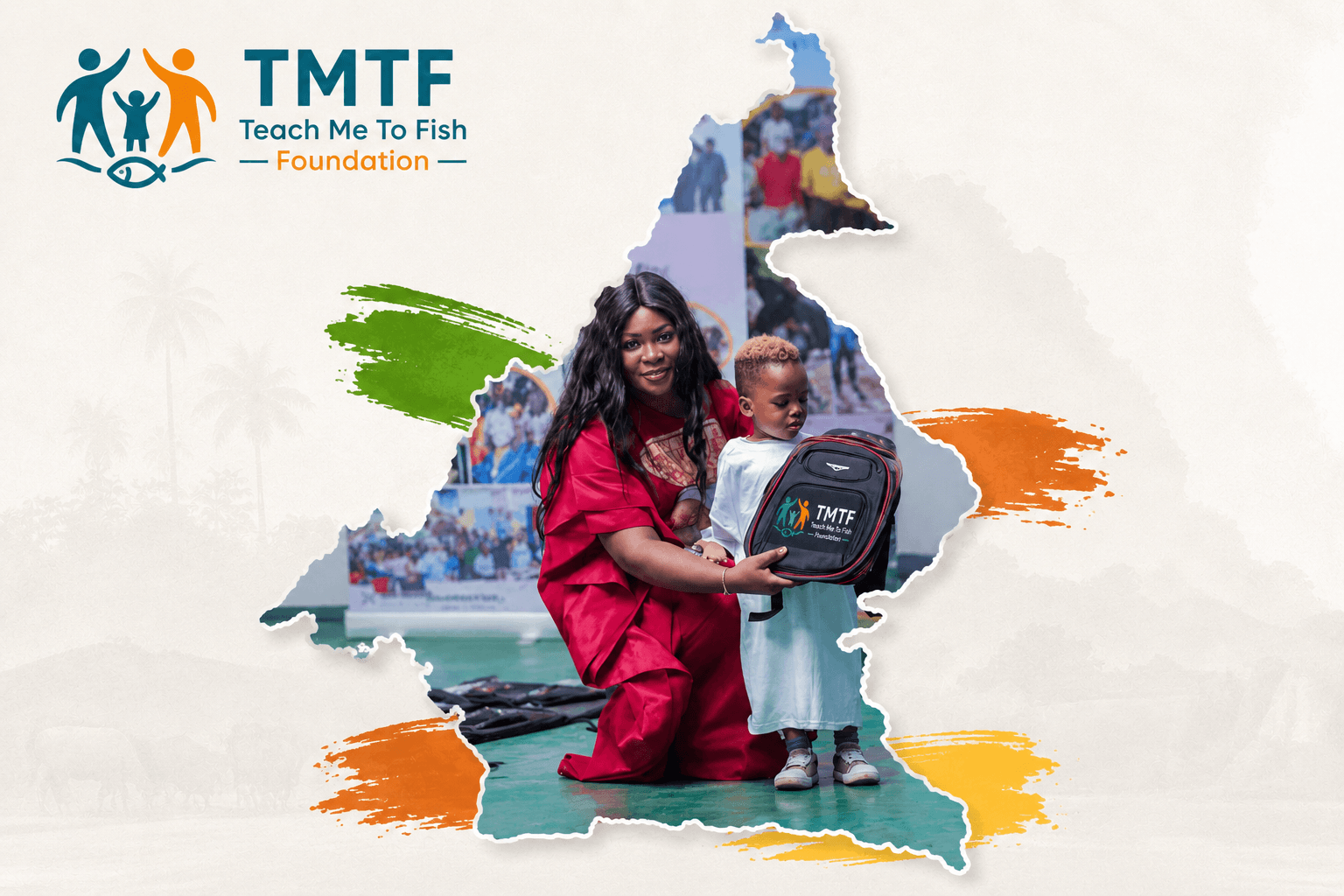
Eteki Stella Dopgima founded the Centre for Youth and Family Empowerment and leads it. She is a gender expert and Director of the Women's Empowerment Centre in Buea. Her team identifies the communities where support is most needed, sources and assesses the children who will receive it, sits with their families, and scouts the small local organisations the foundation goes on to fund. In the charity's own words, that local insight is critical: it is what lets a foundation abroad understand need first-hand rather than at second remove.
Trust is the part that cannot be shortcut. Families hand over information about their circumstances to someone who will be in the same town next year, not to a form. The grassroots organisations that get assessed before funding is committed are assessed by someone who will meet them again. Every safeguard in the way this programme is run rests on somebody local being answerable, and being willing to be.
Resilience is the part the numbers show. Four editions of Back to School carry no separate figure in this issue, because they fell during the Anglophone Crisis, when schools closed and a single registration event was not possible. Support did not stop. It moved to smaller, dispersed distributions and to the children whose education would otherwise have ended altogether. Programmes that survive years like that survive because somebody on the ground refuses to let them lapse.
And determination is the rest of it: turning up for a thirteenth year, to a hall that has to be booked, bags that have to be packed, and several hundred families who have to be told where to come and when. None of that is glamorous and all of it is the work.
“This local insight is critical.”
Our thanks to Stella and to the whole CEYOFE team, and to the volunteers and partner foundations who stand alongside them every September.
Our partners in action
Teach Me To Fish Foundation (TMTF) is a UK-based charity with a mission to transform children's lives through education in Cameroon. While our supporters and donors make this work possible, it is the strength of our team and trusted partners on the ground that turns that support into meaningful, lasting impact.
Our flagship Back to School programme is delivered by the TMTF team in Buea in close partnership with the Centre for Youth and Family Empowerment (CEYOFE), founded and led by Eteki Stella Dopgima, Founder and CEO of CEYOFE, Gender Expert and Director of the Women's Empowerment Centre Buea.
Stella and the CEYOFE team bring invaluable local knowledge, trusted community relationships and hands-on experience to our work. They help identify communities where support is most needed, source and assess potential beneficiaries, engage directly with children and families, and scout credible grassroots NGOs with whom we can collaborate.
This local insight is critical. CEYOFE undertakes much of the important groundwork that allows TMTF to understand needs first-hand and ensure our support reaches the right children and communities.
Eteki Stella Dopgima
- Founder and CEO, CEYOFE
- Gender expert
- Director, Women's Empowerment Centre, Buea
Centre for Youth and Family Empowerment (CEYOFE)
Where the money stops
TMTF provides funding, strategic direction and programme oversight, working alongside CEYOFE to plan and deliver initiatives such as Back to School. Together, we take school requirements directly into communities, listen to children and families, and provide the practical educational support children need to start and remain in school.
Accountability is equally important to us. Smaller NGOs identified for collaboration are assessed before funding is committed. Rather than providing unrestricted grants, TMTF funds agreed activities and programme delivery, allowing us and our partners to remain closely connected to how resources are used and the impact they create.
We are also grateful to the foundations, community organisations, volunteers and individual supporters who contribute alongside us. Their participation transforms an individual charity initiative into a wider community effort.
Our model is deliberately collaborative: TMTF connects resources and supporters in the UK with trusted leadership and delivery expertise in Cameroon. CEYOFE, under Stella's leadership, helps us bridge that distance, ensuring our ambitions are informed locally, delivered responsibly and grounded in the realities of the communities we exist to serve.
“Together, we are not simply giving children school supplies. We are creating the conditions for children to learn, grow and build opportunities for themselves, teaching them, in the spirit of our name, to fish.”
Delivered alongside
- Just Like You Global
- Fobissie Foundation
- Makongo Family Charity
- Ngii and Yvone Tazeh Foundation
- Hope For All Foundation
- Change Care Foundation
- Nso Inspired Foundation
Partner organisations named in the charity's own record of the programme. TMTF is the main sponsor of Back to School and vets the smaller NGOs it works with.
Healthy minds, healthy bodies
You cannot think clearly on four hours' sleep and no breakfast. The unglamorous things are the ones that move your marks.
Sleep
- Children and teenagers need more sleep than adults, not less. Nine hours is normal, not lazy.
- Your brain files what you learned during the day while you sleep. Cutting sleep to revise longer usually loses more than it gains.
Food and water
- Eat something before school. A brain that has not eaten runs slowly and you will not notice, which is the problem.
- Water, not sugary drinks, through the day. Mild thirst is enough to make concentrating harder.
Moving
- Half an hour of moving most days is enough. Walking counts. Football counts. Housework counts.
- Exercise helps sleep, and sleep helps school. It comes back round.
Your mind
- Feeling worried before an exam is normal and is not a sign that you will fail.
- If a low mood lasts weeks rather than days, tell an adult you trust. That is not weakness and it is not rudeness.
Keeping clean
- Washing your hands with soap before eating prevents more illness than almost anything else you can do for free.
- Illness is the commonest reason children miss school. Days missed are harder to recover than they look.
When it is hard
- Everyone finds something difficult. The ones who do well are not the ones who never struggle; they are the ones who kept going while struggling.
- One bad result is a piece of information about what to study next. It is not a verdict on you.
Puzzles, quizzes and one blank page
Pens out.
Word search
Twelve words, hidden across, down and diagonally. Some run backwards.
| Row | A | B | C | D | E | F | G | H | I | J | K | L | M | N |
|---|---|---|---|---|---|---|---|---|---|---|---|---|---|---|
| 1 | X | E | P | F | W | Z | W | P | P | M | O | J | U | V |
| 2 | L | P | R | T | S | R | I | X | I | P | X | J | E | Y |
| 3 | O | R | X | U | L | V | R | E | D | A | E | L | D | O |
| 4 | O | S | C | N | T | H | E | B | I | P | P | U | G | K |
| 5 | H | B | J | L | C | U | F | D | N | X | T | O | Y | C |
| 6 | C | V | Q | T | I | X | F | E | F | S | U | Z | P | K |
| 7 | S | N | D | O | E | C | A | Y | X | M | A | E | R | D |
| 8 | J | R | A | I | B | A | N | O | O | R | E | M | A | C |
| 9 | U | A | G | P | O | G | C | E | Y | A | Y | D | F | E |
| 10 | Z | E | D | I | O | Y | N | H | P | Q | N | N | I | U |
| 11 | A | L | N | P | K | M | V | I | E | J | Z | C | L | V |
| 12 | F | L | H | J | S | L | D | O | D | R | Q | Y | P | S |
| 13 | Q | S | C | I | G | R | W | L | V | O | U | S | L | A |
| 14 | H | O | E | C | N | E | I | C | S | J | C | R | B | W |
Find these
- LEARN
- DREAM
- SCHOOL
- TEACHER
- BOOKS
- SCIENCE
- FUTURE
- CODING
- LEADER
- CAMEROON
- PENCIL
- STUDY
Answers are on the last page of this zone. No peeking.
Quiz and maths challenge
Quick quiz
1. What is the capital city of Cameroon?
Answer: Yaoundé
2. Which two languages are Cameroon's official languages?
Answer: English and French
3. What is the highest mountain in Cameroon?
Answer: Mount Cameroon
4. How many sides does a hexagon have?
Answer: Six
5. What do you call a number that can only be divided by itself and one?
Answer: A prime number
6. Which planet is closest to the Sun?
Answer: Mercury
7. What gas do plants take in from the air to make their food?
Answer: Carbon dioxide
8. What is the longest river in Africa?
Answer: The Nile
Maths challenge
Every one of these can be done without a calculator. That is the point of them.
1. One child's school year costs 10,000 Francs CFA. A donor gives 250,000. How many children is that?
Answer: 25
2. The first Back to School edition reached 127 children. The twelfth reached 880. How many more is that?
Answer: 753
3. A school day runs from 7:30 to 14:15, with a 45-minute break. How long is spent in lessons?
Answer: 6 hours
4. If you read 12 pages a day, how many days to finish a 300-page book?
Answer: 25 days
5. 880 children each receive one exercise book, one pen and one pencil. How many items is that in total?
Answer: 2,640
Things to make
Things to make
Draw your dream career
Draw yourself at work in fifteen years. Put one thing in the picture that shows what you had to learn to get there.
Write to your future self
Write a short letter to yourself at the end of this school year. Say what you intend to have learned. Fold it into the back of an exercise book and find it in June.
Draw your dream career
Word search answers
- CAMEROON — N8, left
- TEACHER — D6, down-right
- SCIENCE — I14, left
- SCHOOL — A7, up
- FUTURE — G6, up-left
- CODING — K14, up-left
- LEADER — L3, left
- PENCIL — I10, up-left
- LEARN — B11, up
- DREAM — N7, left
- BOOKS — E8, down
- STUDY — J6, up-right
Together, we are teaching children to fish
Not simply giving them fish. Thank you to everyone who made this year's Back to School possible.
To the donors who gave, the volunteers who packed and handed out bags, the teachers who told us which children were missing, the parents who came, and the foundations who worked alongside us: this is your year as much as ours.
Ways to be part of the next one
Fund one child
Ten thousand Francs CFA covers a child's fees, uniform and materials for the school year.
Sponsor a named child
Sustained support for one child, continuing for as long as they stay in education.
Fund an edition
One corporate partner can fund an entire edition of Back to School, in full or in part.
Give time
Volunteering, fundraising and ambassador roles, in Cameroon or remotely.
Scan to find us
Our website
The whole story, updated as it changes.
teachmetofish.international
Sponsor a child
What sponsorship covers and how it works.
teachmetofish.international/sponsor-a-child
Volunteer or partner
Every route in, including fundraising.
teachmetofish.international/get-involved
“Teach me to fish, do not keep giving me fish, so when you are not there to provide the fish, I will fish for myself and not go hungry.”
Together, we're teaching children to fish, not simply giving them fish.
About this issue
- Published by
- Teach Me To Fish Foundation, founded 2010. Registered in Cameroon; UK charity registration in progress.
- Photography
- The charity's own team, at Back to School events in Buea. Every photograph published here has been looked at and described; none is stock. Images marked as placeholders are AI-generated from that same event photography and are to be replaced.
- Figures
- Taken from the charity's own record of the programme. Where a figure does not exist, this issue says so rather than estimating it.
- Safeguarding
- Children are photographed with parental or guardian consent. No child is named, and no story is published without written consent covering this use.
- Corrections
- If a figure, a quotation or a description in this issue is wrong, we would rather be told and correct it than have it quietly stand.
Teach me to fish, don't simply give me fish.
TMTF MAGAZINE · Issue one · 2026